
Back to the Future - resetting the relations between Kosovo and USA
In the last 4–5 years, Kosovo’s relations with the US have reached their lowest point in modern history. How can the next government usher in a new era of active, strategic dialogue?

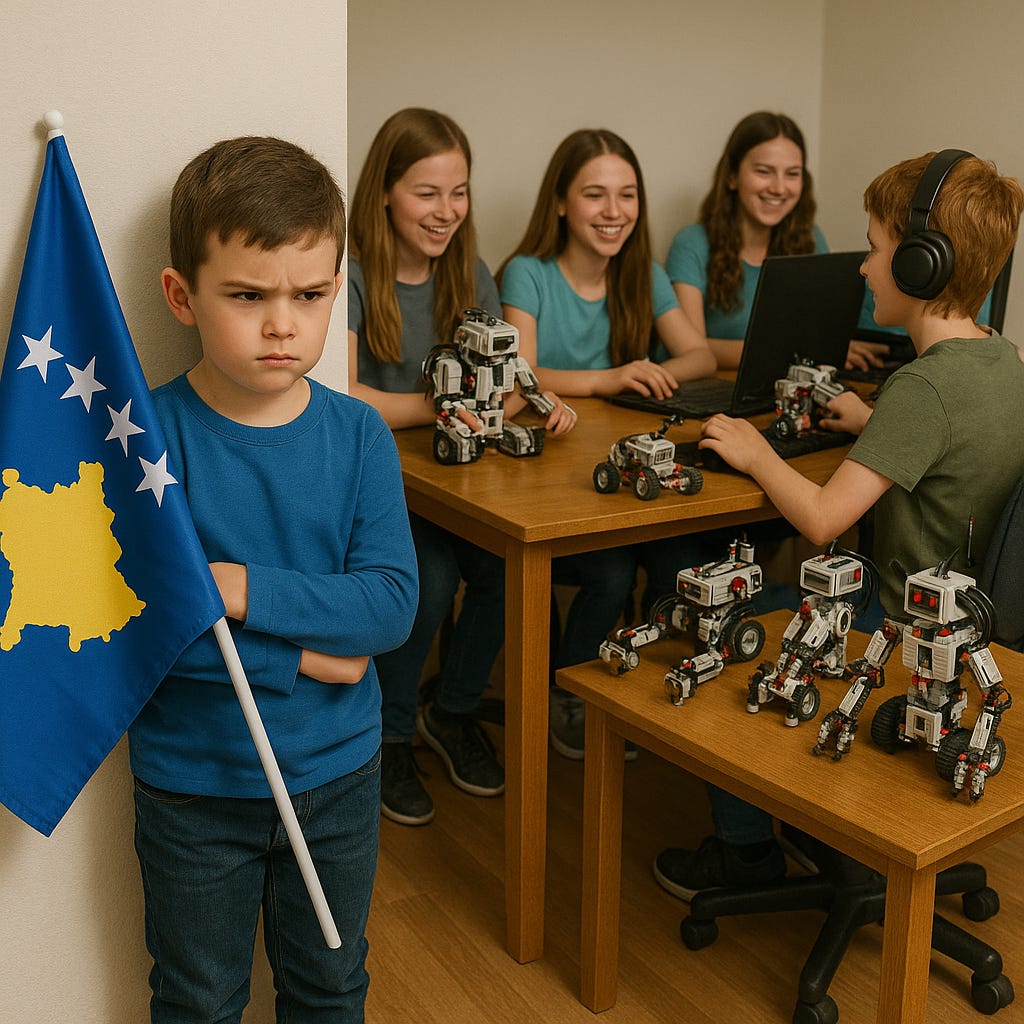
The USA is Kosovo’s “indispensable partner,” yet one whose advice we have now decided to dispense with.
For decades, Kosovo has been connected to the USA through deep political interactions that began in the 1980s, during the final years of the former Yugoslavia, and then peaked between 1998 and 2008, when the USA was both the savior of Kosovo from the genocidal intent of the Serbian regime and the provider of Kosovo’s freedom and independence via the Ahtisaari process, which brought sovereignty to Kosovo. No wonder that Prishtina’s George W. Bush Boulevard connects to Bill Clinton Avenue, which crosses Senator Bob Dole Street and ends at Madeleine Albright Square.
In subsequent years, the bilateral dialogue between a newly independent Kosovo and the USA shifted from the issues of physical survival to more structured and strategic relations, taking shape in four distinct areas:
Diplomatic cooperation and coordination were deep and successful, enabling Kosovo to be recognized by other countries and to join institutions such as the IMF and the World Bank. Intensive diplomatic communication unfolded at all levels—from high-level visits to the White House, to daily communication with the American Embassy and the Kosovo Desk at the State Department—on issues ranging from U.S. outreach on Kosovo’s behalf in the Caribbean, South America, or Western Africa, to securing votes for EBRD membership, to obtaining a SWIFT banking code for Kosovo.
Economic cooperation began to blossom, enabling the involvement of major corporations such as Bechtel in building Kosovo’s major highways, initiating negotiations to construct a new power plant with an American company, and including Kosovo in programs of the U.S. federal agency Millennium Challenge Corporation—thus unlocking hundreds of millions of potential investments in the energy sector. The private sector began playing its part, with Kosovan companies increasing exports to the U.S., while American companies began outsourcing digital operations to Kosovo.
Defense and intelligence cooperation also rested on solid ground. The USA helped establish a modern Kosovan intelligence service and transform the civil protection corps into a proper defensive military force. Many joint operations were conducted to counter global challenges such as the rise of Islamic extremism and terrorism, and to combat Russian influence. Example: the role of Kosovo intel service in preventing the attack on Israeli football team in neighboring Albania was hailed in the USA.
Following the ICJ opinion on the legality of Kosovo’s Declaration of Independence and the subsequent UNGA resolution launching the dialogue on normalization between Kosovo and Serbia, the USA played a fundamental role in reaching both the first Brussels Agreement and the Washington Agreement. Kosovo and the USA coordinated deeply on all aspects—especially in maintaining and guaranteeing the Ahtisaari framework and Constitution while enabling the Serbian minority to integrate.
Under former Prime Minister Kurti, Kosovo has drastically reduced its relations with the United States, bringing tensions never before witnessed between Kosovo and two consecutive U.S. administrations. Senior American diplomats in Washington, Prishtina, and Belgrade have begun questioning Kosovo’s willingness to remain a genuine partner. Our diplomatic footprint in the U.S. has shrunk, due both to concrete steps (such as the intentional downgrading of Kosovo’s Embassy influence in Washington by the Prishtina government) and to outright lies and broken promises made to U.S. interlocutors, from diplomats serving in Prishtina to the CIA Director and visiting U.S. Senators. Kosovo is now experiencing the worst relations with the United States in its modern history.
New approach, new stakeholders, new everything.
The U.S. government has repeatedly stated its national interest in our region: a peaceful Kosovo and Balkans, integrated into the European and Atlantic community. This national interest is pursued through various processes and tools - from bilateral aid, to support for dialogue, to increased economic and defense cooperation. But this requires a responsive and responsible partner in Kosovo: one capable not only of restoring relations to their previous level, but of expanding them into new areas such as the energy sector, artificial intelligence, cybersecurity, green technologies, and regional infrastructure - creating a deeper, future-oriented partnership that benefits both sides. Serious investments in upholding Kosovo’s constitutional framework, including obligations to the Serbian community, are essential to opening the way for proactive U.S. engagement on Kosovo’s behalf.
It is hard to imagine this happening under the direction of the outgoing Prime Minister Kurti. He has different plans - focused on dismantling the Ahtisaari legacy - and he has been clear, consistent, and categorical about his approach. His actions have been focused at diminishing the role played by the USA in Kosovo as he considers this influence detrimental to his political vision.
The only question is whether Kosovo’s political parties will muster the will and strength to reset relations with the USA, which will require a reset within Kosovo itself. This demands courage, a quality sorely lacking in the young generation of opposition politicians. Yet courage must be found. Kosovo must simultaneously take steps at home to create stability and progress, and implement measures, projects, and processes that hold value for the new American political landscape, one where the memory of 1999 or 2008 is fading, but new opportunities may yet arise to strengthen the partnership with a truly indispensable ally.
Post scriptum: A new age dawns.
Prompted by a tweet from former German State Secretary and Ambassador Wolfgang Ischinger, I followed an online hearing titled “Converting Energy into Intelligence” at the U.S. House of Representatives. We read a lot about AI nowadays, but this hearing focused primarily on the energy demand side of the AI revolution. I have pulled a lengthier quote from Eric Schmidt, former CEO of Google, to highlight one issue that deserves the most sobering scrutiny:
“The arrival of this new intelligence will profoundly change our country and the world in ways we cannot fully understand. And none of us, including myself and frankly anyone in this room, is prepared for the implications… People are now planning 10-gigawatt data centers. Just to translate: an average nuclear power plant in the United States is one gigawatt. How many nuclear power plants can we build in one year while we’re planning this 10-gigawatt data center? It gives you a sense of how big this crisis is. Many people think the energy demand from our industry will go from 3% to 99% of total generation. One of the estimates I think is most likely is that data centers will require an additional 29 gigawatts of power by 2027 and 67 more gigawatts by 2030… China has entered the competition. What happens if China beats us? Let’s think about it. The path to intelligence - that superhuman intelligence - has national security implications beyond anything we can predict. This is why, although everyone is concerned about Taiwan, I am much more concerned about this: if they get to superintelligence first, it changes the global balance of power in ways we cannot understand or control.”
There is little that Kosovo can contribute to the global conversation on the tectonic shifts underway, but it is worth keeping in mind the current state of debate in Washington, D.C. Our own challenges are far more modest, where the stakes may be smaller in scale, yet no less significant for the communities they affect.
If we want to be heard and to re-connect with Washington, we must learn to operate within contemporary political, technological, and economic frameworks. A return to old Westphalian politics (while perhaps in vogue elsewhere), will not serve Kosovo’s interests.
Author is a non-resident Fellow of Center for Public Diplomacy at University of South California and former foreign minister of Kosovo.
Illustration is AI generated.
Petrit,
An excellent post and one that is very troubling. Thanks for setting out the serious challenge Kosova and its new government faces if it attempts to rebuild a once warm and supportive relationship with the U.S. I wish Prishtina luck!